Claude Monet
“Everything is wonderful, and every day the countryside becomes more beautiful; I am enchanted by this place,” wrote Claude Monet in 1884 to his Parisian art dealer Durand-Ruel. He was writing from Bordighera, where he had arrived on 18 January.
Monet stayed at the Pension Anglaise and believed he could create remarkable works there because “everything here is beautiful and the weather is superb.” He worked “en plein air”, trying to capture the magic of colours on canvas.
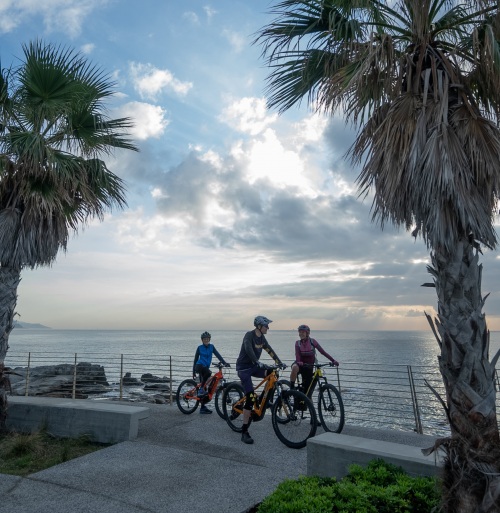
He was fascinated by the “blue sea”, the exotic palms and the lush vegetation of the Moreno Gardens, about which he wrote: “A garden like that resembles nothing else; it is simply fantastical, all the plants in the universe seem to grow there spontaneously.”
He was often restless and dissatisfied: “I would like to paint orange and lemon trees standing out against the blue sea, but I cannot find them as I wish. As for the blue of the sea and sky, it is impossible.”
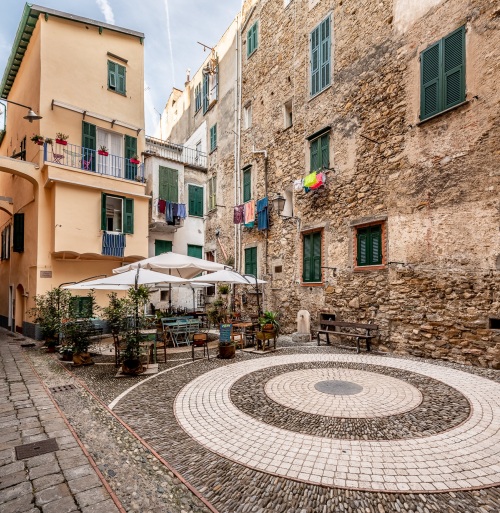
He painted Via Romana and the Old Town seen from afar, from the heights of the Torre dei Mostaccini, as well as the Vallone del Sasso. He also explored the inland areas.
Monet left Bordighera on 3 April. In seventy-nine days, the master of Impressionism painted more than fifty canvases — an extraordinary memory of a magical encounter.
Recently, the city of Bordighera dedicated gardens to Claude Monet, located within what remains of the now vanished Moreno Gardens.
From “Bordighera” by A. Besio, 1998, SAGEP-Genoa.

Photo source: Wikipedia